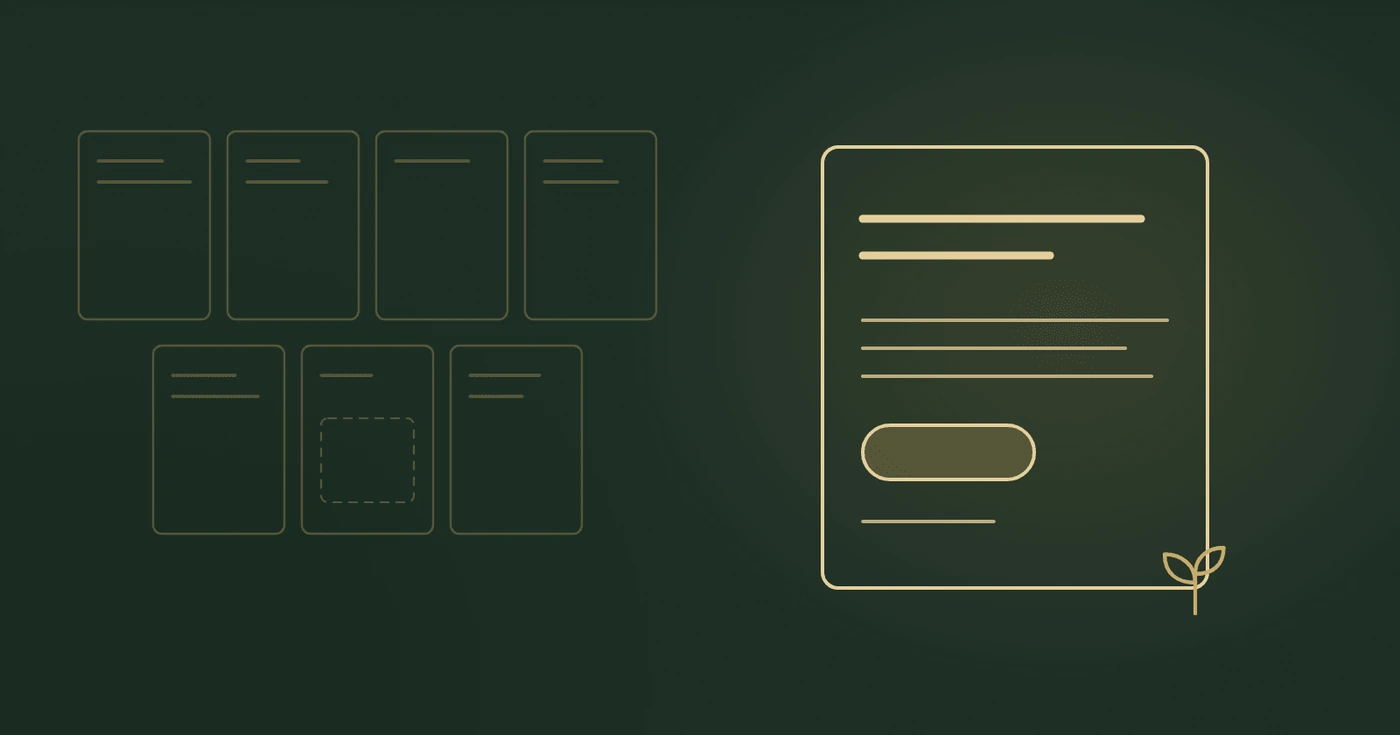
Early-stage founders tend to build seven pages. Home, about, services, team, blog, case studies, contact.
The blog gets two posts and then stops. The team page has two people on it, one of whom is also the cofounder's flatmate. The case studies page is empty, because there aren't any yet, so it just says “coming soon” for a year.
Meanwhile the actual job of the site, getting a stranger to start a conversation, is sitting behind a form on page seven.
The One Job
Someone lands on your site. They came from a search, a LinkedIn post, a business card, or a recommendation. They arrive with one question in their head, and it's roughly this: can these people do the thing I need, and are they real?
You've got a few seconds to answer it. Everything on the page is either helping with that or competing with it.
Three things do the work. What you do, said plainly. Who it's for. How to talk to you.
That's the site. Everything else is optional until you have traction, and optional things added early tend to make the answer harder to find, not easier.
What Earns Its Place
A headline that says what you do in the words a customer would use. Not the words your industry uses. If someone outside your sector can't tell what you sell from your homepage headline, it isn't finished.
Enough proof to be credible. That might be one testimonial, a named client, a photo of you actually doing the work, or a number. One real thing beats five vague ones.
A way to get in touch that doesn't feel like an application. A phone number, an email address, or a booking link. Forms are fine, but not as the only option. Some people want to ring you, and those are often the ones ready to buy.
Some sign you exist as a real business. An address, a company number, a face. Being unfindable is the fastest way to lose a cautious buyer.
What Doesn't Earn Its Place Yet
A blog you won't write. An empty blog is worse than none, because a post dated eighteen months ago signals abandonment more strongly than a missing menu item ever could.
A team page for a team of two.
Case studies you don't have. “Coming soon” is a promise you're currently breaking on your own website.
An FAQ answering questions nobody has asked. You don't know what people will ask yet. Wait until they do, then answer those.
The Impressive Trap
The reason this happens is that founders look at competitors who have been going ten years, and copy the shape of their sites.
But that shape reflects ten years of accumulated material. Copying it gets you the silhouette of an established company with nothing inside it, which reads as less credible than a single honest page, not more.
A one-page site that's clear, current, and easy to contact does not look like a small operation cutting corners. It looks like someone who knows what they're doing. Seven half-finished pages look like someone who hasn't started.
Start Smaller Than Feels Right
Build the smallest site that can do the one job. Put it live. Watch what people ask you, where they get stuck, what they call the thing you sell.
Then add pages because you have something to put on them, rather than because a template had a slot.